Sri Rampai, Wangsa Maju
Kuala Lumpur, Malaysia
adyaakob@gmail.com
+60 102369037
Sri Rampai, Wangsa Maju
Kuala Lumpur, Malaysia
adyaakob@gmail.com
+60 102369037

This post explores which companies in the AI world might face challenges similar to Nokia or Kodak in the future. It asks a simple question: Which established firms could fall behind if they don’t keep up with fast-changing AI trends? Even top players in AI need to update their strategies regularly to stay ahead.
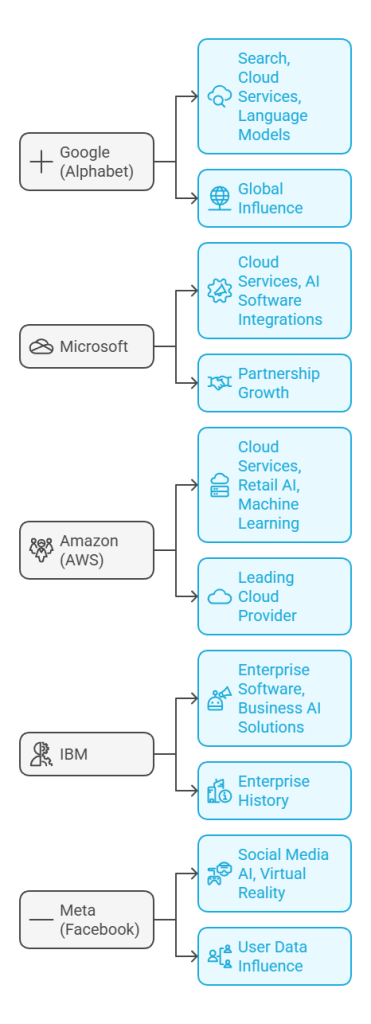
Several major companies shape the AI scene today:
| Company | Focus Areas | Influence |
|---|---|---|
| Google (Alphabet) | Search, cloud services, language models | Global reach, large research budget |
| Microsoft | Cloud services, AI software integrations | Strong growth through partnerships |
| Amazon (AWS) | Cloud services, retail AI, machine learning | Leading cloud provider with broad AI use |
| IBM | Enterprise software, business AI solutions | Long history in enterprise solutions |
| Meta (Facebook) | Social media AI, virtual reality | Large user data, heavy AI investments |
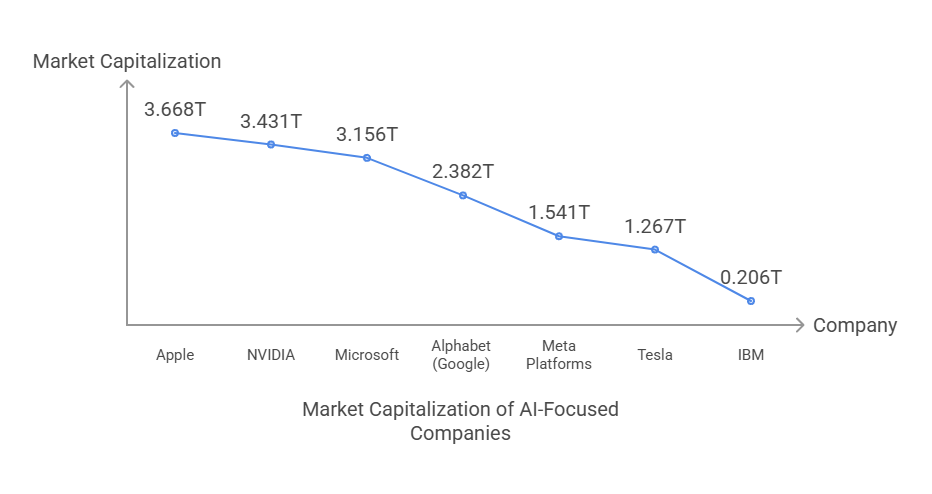
Big companies continue to pour resources into AI. Here’s a look at some of these leaders, their market value, and what they focus on in AI work:
| Company | Market Cap | Focus in AI Work |
|---|---|---|
| Apple (AAPL) | $3.668 T | Uses AI in products like Siri, Face ID, and to improve camera features and personalized recommendations. |
| NVIDIA (NVDA) | $3.431 T | Provides graphics processors used in AI tasks and develops software platforms for different industries. |
| Microsoft (MSFT) | $3.156 T | Invests in AI for cloud services, office software, and search tools. |
| Alphabet (Google) (GOOG) | $2.382 T | Develops AI models for search, voice assistants, and self-driving cars. |
| Meta Platforms (Facebook) (META) | $1.541 T | Applies AI to social media platforms and explores uses in virtual spaces. |
| Tesla (TSLA) | $1.267 T | Works on self-driving car technology using AI. |
| IBM (IBM) | $206.36 B | Builds enterprise solutions with AI, notably through the Watson platform. |
| Amazon | N/A | Enhances its online store, logistics, and cloud services with AI, powering Alexa, warehouse robots, and smart delivery systems. |
The table below lists signs that a company might struggle if it does not adapt in the AI field:
| Warning Sign | What It Means | Possible Impact |
|---|---|---|
| Sticking to Old Ways | Not changing products or strategies | Falling behind competitors |
| Low Investment in Research | Not spending enough on new technology | Slow response to market changes |
| Late to New Trends | Delaying entry into new areas | Losing first-mover advantage |
| Resistance to Change | Internal refusal to adopt new approaches | Blocks innovation |
| No New Partnerships | Not teaming up with others for new capabilities | Difficulty adding new skills |
Here are some companies that might face trouble if they don’t keep up with AI changes.
Strengths:
Risks:
Strengths:
Risks:
Strengths:
Risks:
Strengths:
Risks:
Big companies working in AI must stay flexible and ready to change. They risk falling behind if they rely on old methods and hesitate to try new approaches. By watching for warning signs and updating their practices, these firms can avoid a decline similar to Nokia or Kodak.
Key Points:
Note: This analysis is based on current trends and doesn’t guarantee any company’s future. It aims to spark thought about potential challenges in the AI sector.